A glitter of hope: Nush’hika Akter
Nush'hika Akter is an eighth-grade student supported by AKWO's stipend program, and she intends to make her father proud.

Nush'hika Akter is an eighth-grade student. Her father, Md. Nasar Mia, and her mother, Marufa Akter, a homemaker, have always been her inspiration. She dreams of bringing happiness to her father's face when she grows up. She is a beneficiary of Abul Khair Welfare Organization.
Where a school career is lost
Very few families here take a child out of school because they think education is worthless. They do it because a term's fee, an exam registration, a uniform or a set of books arrives in the same month as a hospital bill or a failed harvest. Class eight is one of the points where that decision is most often made, and it is usually made about a daughter.
What the stipend does
The stipend program provides financial aid to deserving students from primary to higher secondary level, paid against the actual costs a family faces rather than as a lump sum. It exists to cover exactly the moment described above, so that a temporary shortage does not end a school career permanently. We are supporting 21 students this way.
How the stipend is paid
Against the actual costs, and wherever possible directly to the school rather than to the household. That protects both sides: the family is not asked to choose between a term's fee and a month's food, and the money cannot quietly become something else under pressure. It also means the record of what was spent is a receipt rather than a promise.
Why we name her
Nush'hika's family agreed to her being named and photographed. Most of the students we support are not named, and their reports to sponsors are anonymized. We ask each family separately, every time, and a no changes nothing about the support.
Why class eight matters
The years around class eight are where the largest number of school careers end here, and they end disproportionately for girls. A family under financial pressure weighs a daughter's remaining school costs against the household's immediate needs, and the arithmetic usually wins. What a stipend does is remove the arithmetic from the decision for that term.
It is a modest intervention with a long tail. A student who reaches higher secondary level has options that a student who leaves at class eight does not, including the free computer and trade courses this organization runs, and including work that does not depend on physical labor.
Her ambition, in her own account of it, is straightforward: to grow up and bring happiness to her father's face. Keeping her in school is the whole of what we are being asked to do about it.
Facts at a glance
- Program
- Educational stipend
- Students supported
- 21
- Levels covered
- Primary to higher secondary
Support our Education work
Three pillars: a stipend so a child is not withdrawn from school for the price of a uniform, free computer training that ends in a certificate, and free technical education in trades that pay.
Registered with the Ministry of Social Welfare, Government of Bangladesh · Reg No. Brahman 615/24
Read next
 Success Stories
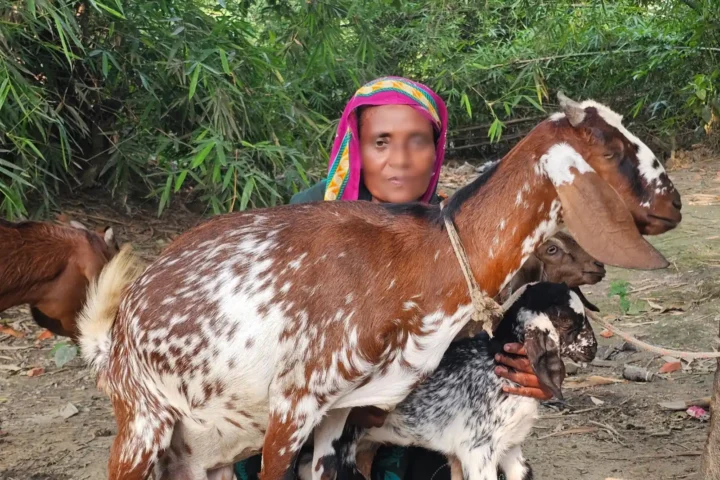
Success Story: One Goat, and Jharna Begum’s Fresh Start
In 2022 Jharna Begum of Khan Bari, Hajir Hati was given a single goat under AKWO's self-reliance project. She now keeps six.
 Success Stories
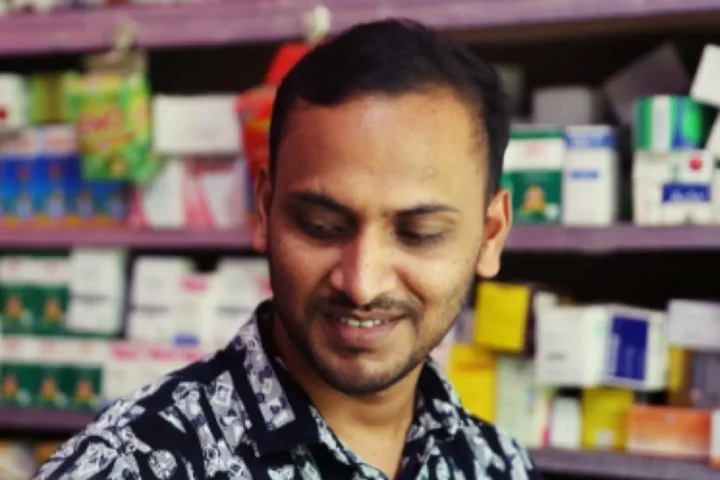
Overcoming adversity: Anhar’s pharmacy
Anhar became self-reliant by opening his own pharmacy with a small one-off grant from Abul Khair Welfare Organization.
