Skip to content
+88 01768 003 747Free clinic every Friday 10:00–14:00Facebook(opens in a new tab)ENবাংলা
Donate
A health worker treats a young child on his mother's lap during a mobile health campaign

Programs

Our programs

Five programs, all free to the people who use them, all run from the office at Baishmouja Bazar on the Meghna river bank. Healthcare came first in 2019 and is still the largest.

Abul Khair Welfare Organization works in the villages of Nabinagar Upazila in Brahmanbaria district, principally in Krishnanagar Union and Birgaon Union. This is riverside farmland on the Meghna, where most households live on day labor, farming, fishing and remittances, and where the nearest hospital is far enough away to be out of reach on a bad day.

Our five programs answer the sequence in which trouble usually arrives. Someone falls ill and cannot pay for a consultation, so we run a free clinic. A flood or a lockdown stops the household's income, so we deliver food. A house or a tube well is destroyed, or winter turns sharp, so we run emergency relief. A child is about to be taken out of school for lack of fees, so we pay a stipend. And a family with no capital at all needs one asset to start from, so we make a livelihood grant.

None of these programs charges anything. There is no membership, no means test on the clinic door and no requirement to be from any particular village, community or party.

What the five have in common

Each program is free at the point of use, is run from the same office, and is written up afterwards with real numbers rather than round ones. Each has a budget agreed before the work starts and a named person answerable for it. And each is small enough that a donor can visit and check it in an afternoon.

They also feed one another. The clinic register tells the food program which households are showing up with nutritional deficiency. The relief lists tell the education program which families are about to withdraw a child from school. The livelihood grants go to households already known to both. A single organization running five small programs in two unions knows things that five separate organizations would not.

The five programs

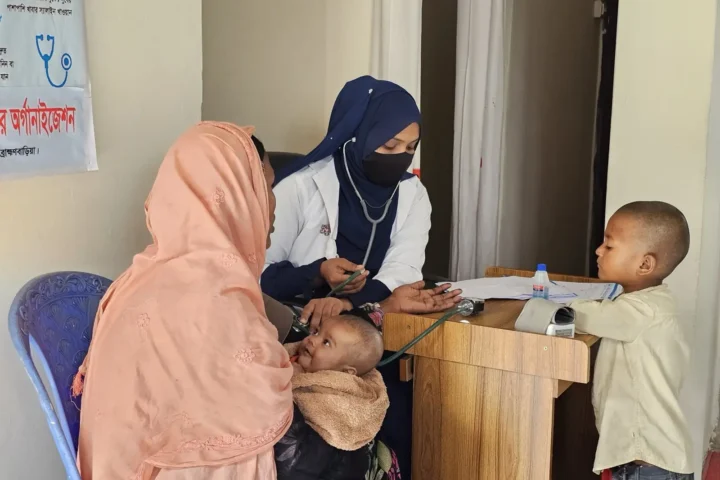
An AKWO health assistant records a woman's blood pressure while her child stands beside the desk

Healthcare

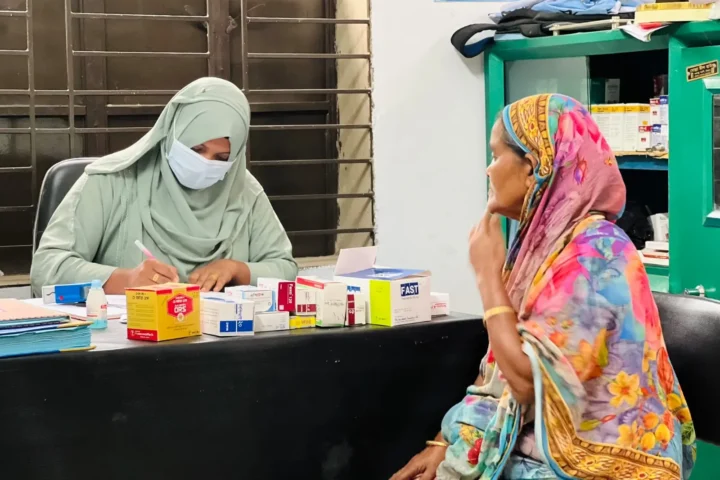
A free weekly clinic and regular mobile camps, run by specialist doctors since 2019. Consultation, diagnosis and basic medicines are free, and nobody is asked what they earn.
Food Support

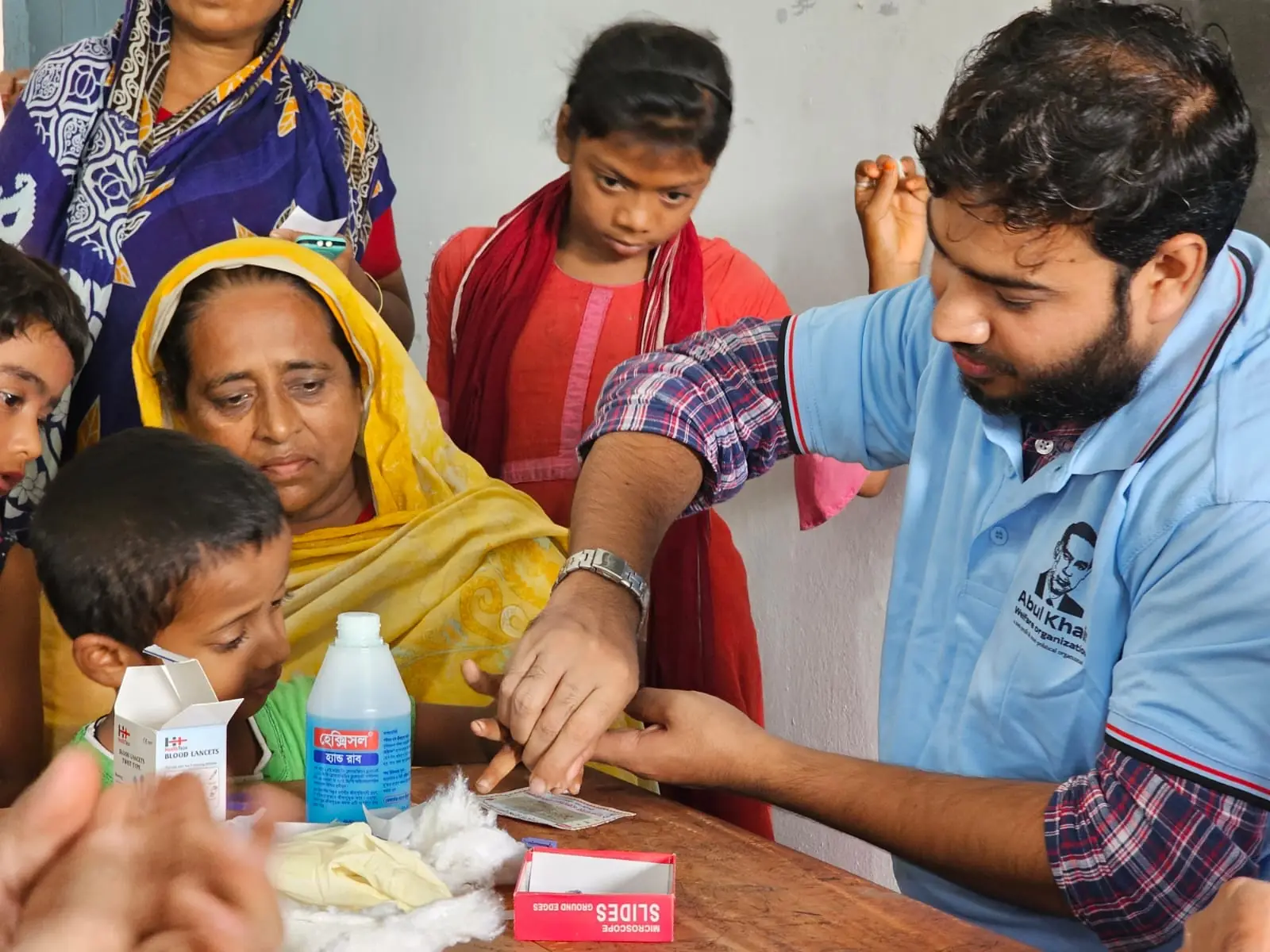
Food is the first thing a household loses when the work stops. Our Food Support program answers that in four ways: emergency relief, Eid and Ramadan packages, regular rations and cooked meals at community distributions.

Emergency Relief

When a flood, a fire, a cold snap or a medical emergency hits a household here, our job is to arrive in days rather than months, and to say honestly what we can and cannot cover.

Education

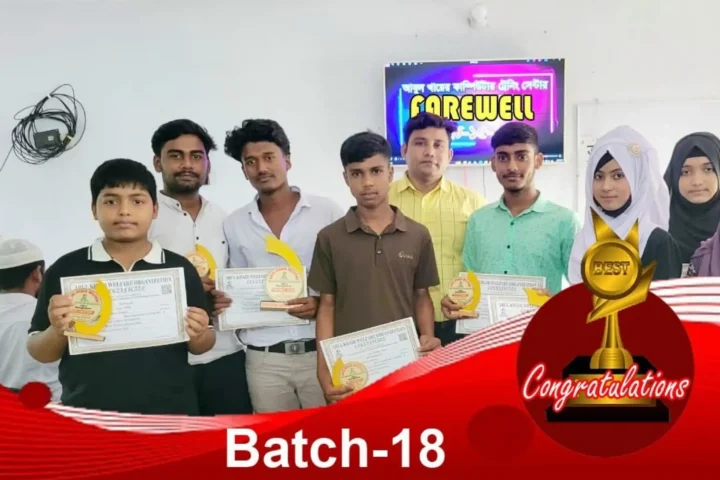
Three pillars: a stipend so a child is not withdrawn from school for the price of a uniform, free computer training that ends in a certificate, and free technical education in trades that pay.

Livelihood

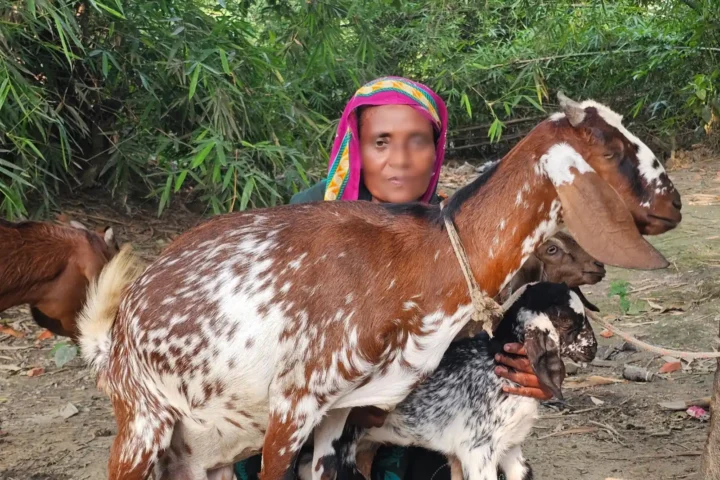
One asset, given once, to a household with no capital at all. A goat, a stock of medicines, a stall. After that the household is on its own, which is the point.
Where we work

Krishnanagar Union and Birgaon Union, in Nabinagar Upazila, Brahmanbaria district. The clinic office is at Baishmouja Bazar on the Meghna river bank. The Academic Building is at Uttar Lakshmipur High School. The livelihood grants have gone to households in Hajir Hati and the villages around it.

Campaigns have gone further when the need was clear, including the flood response at Umedpur in Mogra Union, Akhaura, which treated more than 250 people. But the core of the work stays deliberately within a short journey of the office, because a program that can be visited and checked on the same afternoon is a program that can be held to account.

Across all programs

44,000+People treated free of charge since 2019
1,029+Families reached with food and relief
7Years of weekly free clinics
18Computer training batches completed

as of month and year these figures were last checked · These numbers come from AKWO's own clinic registers and distribution lists. Where our older pages carried two different figures for the same measure, we publish the lower one until the trustees confirm the official set.

How a program runs

  1. Plan

    A written action plan sets out what will be done, who is involved, what it costs and what the beneficiary should receive. The budget is agreed before any money is spent.

  2. Deliver

    Fixed start and end dates, a named person responsible, and monitoring at every phase, with local volunteers and elders taking part and the local administration kept informed.

  3. Report

    Every donor receives an account of the activity they funded, and a summary is published here and on our Facebook page with the numbers included.

Program reports

Fund a program

You can give to the general fund or tell us which program your gift is for.

Registered with the Ministry of Social Welfare, Government of Bangladesh · Reg No. Brahman 615/24