Skip to content
+88 01768 003 747Free clinic every Friday 10:00–14:00Facebook(opens in a new tab)ENবাংলা
Donate
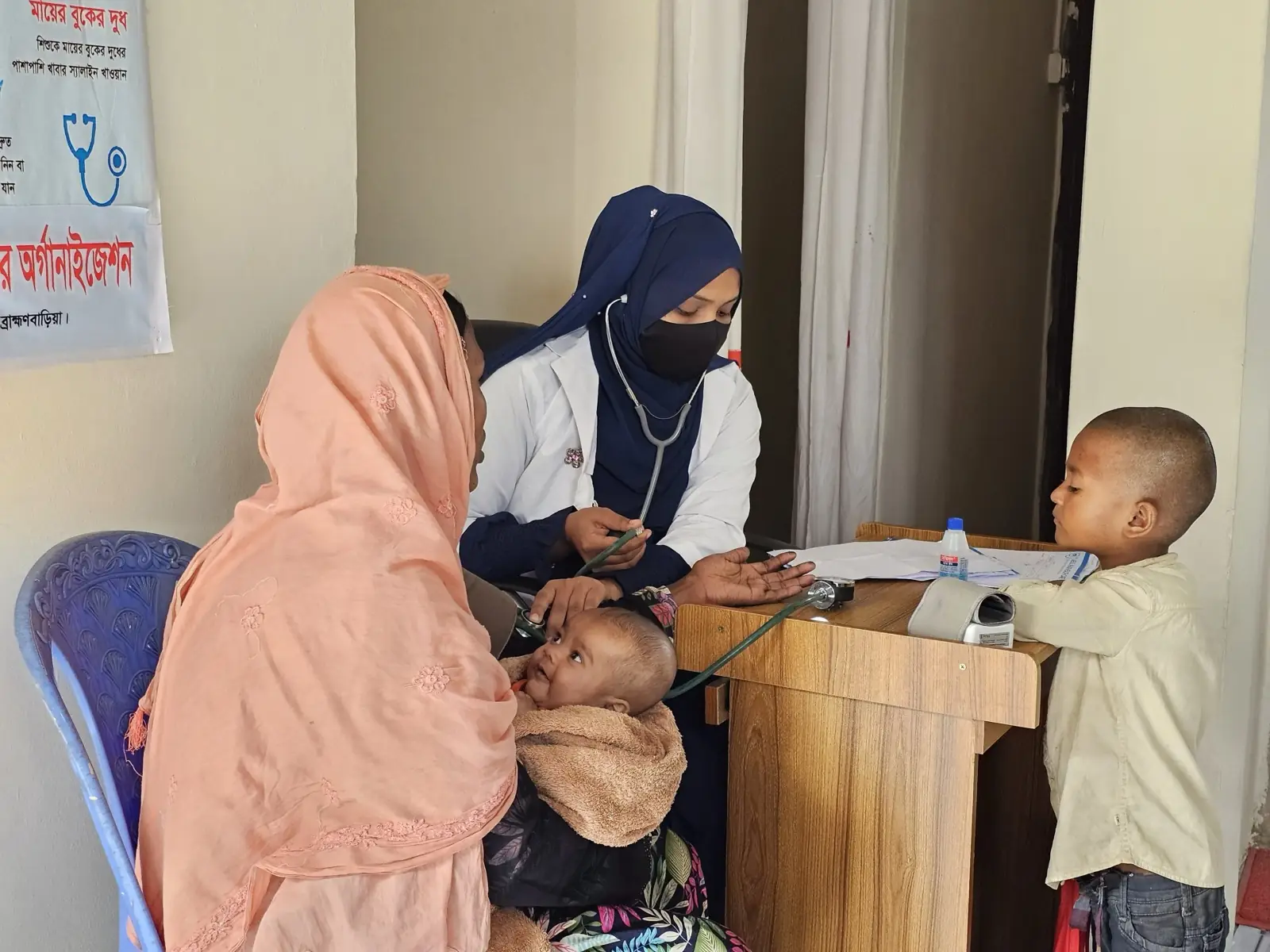
An AKWO health assistant records a woman's blood pressure while her child stands beside the desk

Programs · Abul Khair Health Care (AKHC)

Healthcare

A free weekly clinic and regular mobile camps, run by specialist doctors since 2019. Consultation, diagnosis and basic medicines are free, and nobody is asked what they earn.

The clinic at a glance

Every Friday, 10:00–14:00

When
Every Friday, 10:00–14:00 Next: 30 Oct
Where
Baishmouja Bazar, Meghna River Bank, Nabinagar, Brahmanbaria
Who you will see
Two specialist doctors, a health assistant and local volunteers run every clinic day.
What to bring
what patients should bring to the clinic, for example previous prescriptions or test reports

Our commitment to health

At Abul Khair Welfare Organization we believe healthcare is a fundamental human right, not a privilege. For years we have stood as a lifeline for underserved communities through weekly medical clinics and large-scale health campaigns, so that nobody in this part of Nabinagar is left without care at the moment they need it most.

The clinic has run every Friday since July 2019 from the office at Baishmouja Bazar, on the Meghna river bank. A team of two specialist doctors writes prescriptions and dispenses urgent medicines. Over the first five years the organization treated close to 44,000 people, and by May 2026 we reported passing 70,000 in seven years of continuous work.

What we offer is primary care and referral. Our doctors consult, diagnose, treat common conditions, dress wounds, manage infections and hand out medicine. Where a case needs a hospital, an operating theater or a specialist we do not have, our job is to say so quickly and to refer the patient on. We do not run an emergency department and we never pretend to.

How we deliver care

1. Weekly medical clinics

Every Friday our team of doctors, nurses and volunteers turns the office at Baishmouja Bazar into a working clinic. We provide:

  • Free consultations for chronic diseases such as diabetes
  • hypertension and asthma.
  • Maternal and child healthcare: prenatal checkups
  • vaccinations and nutrition counseling.
  • Wound dressing
  • management of infections
  • and referrals for critical cases.
  • Free medicines for those who cannot afford treatment.

2. Mobile medical campaigns

Beyond the weekly clinic we take teams out to remote villages, riverside settlements and disaster-hit areas. Campaigns focus on:

  • Disease prevention: vaccination drives
  • hygiene sessions and mosquito net distribution.
  • Specialized care
  • including eye camps
  • dental checks and screening for diabetes and blood pressure.
  • Crisis response: treating injuries and outbreaks during floods and other emergencies.

Campaigns run roughly twice a month. Venues are announced in advance on our events page and our Facebook page.

Healthcare in numbers

Patient counts are taken from the clinic register on the day.

44,000+People treated since 2019
44 to 79Patients on a typical clinic day
2Specialist doctors on duty
2 a monthMobile health campaigns

as of month and year these figures were last checked · These numbers come from AKWO's own clinic registers and distribution lists. Where our older pages carried two different figures for the same measure, we publish the lower one until the trustees confirm the official set.

What people come with

The case mix is consistent from week to week and it tells you a good deal about life here. On a Friday in May 2025 the clinic treated 54 patients: 24 children, mostly with itching, loose stools and fever; 24 women with general weakness, joint pain, headaches and nutritional deficiency; and 6 men with fatigue, body aches and skin irritation.

At the camp of 1 May 2026, 79 patients were seen by Dr Syed Siddiqui Swan: 28 children, 43 women and 8 men, with lower back pain, cough and itching the most common complaints. In February 2025, after a sharp cold spell, more than 200 patients came over two Fridays, with a marked rise in sick children.

Two patterns repeat. Women and children are the majority, because they are the people least likely to be taken to a paid doctor. And the conditions are largely preventable or easily treated if seen early, which is the entire argument for a clinic that costs nothing to walk into.

What we do not do

We are not a hospital and we are not an emergency service. We have no beds, no operating theater, no ambulance and no laboratory beyond the basic tests a camp can carry. Anyone who arrives with a condition that needs any of those is referred, and the doctor tells them where to go and what to say when they get there.

We do not offer treatments outside primary care, and we do not make claims about curing chronic or serious disease. What we do is see people early, treat what can be treated simply, manage long-term conditions with medicine and advice, and get the rest to somebody who can help. Saying that plainly is part of the service, because a patient who is told honestly that they need a hospital is more likely to go to one.

Inside the healthcare program

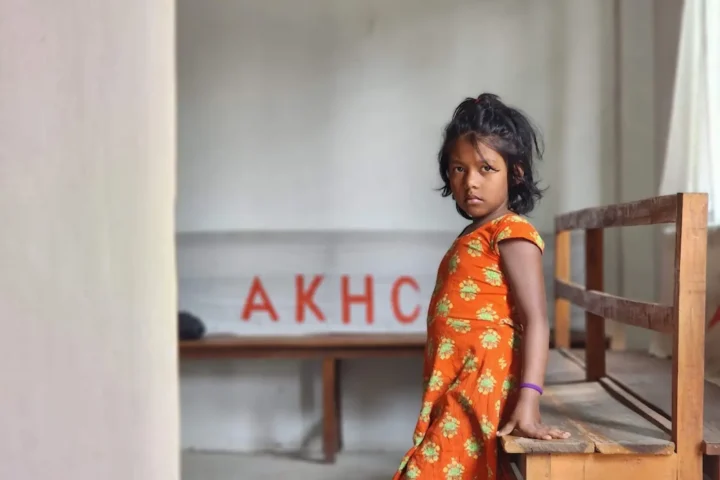
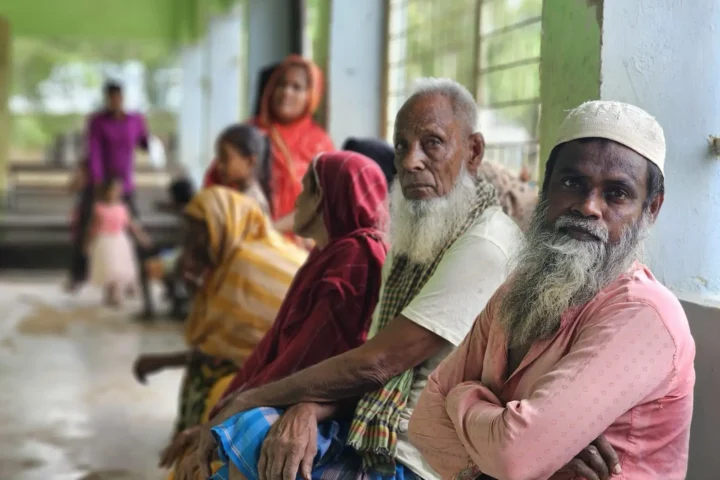
Two elderly men wait on a bench among other patients at the free Friday clinic in Baishmouja

Free Friday Clinic

Every Friday for the last seven years we have opened a free clinic at Baishmouja Bazar. Come between 10:00 and 14:00. There is no appointment, no fee and no form to fill in beforehand.
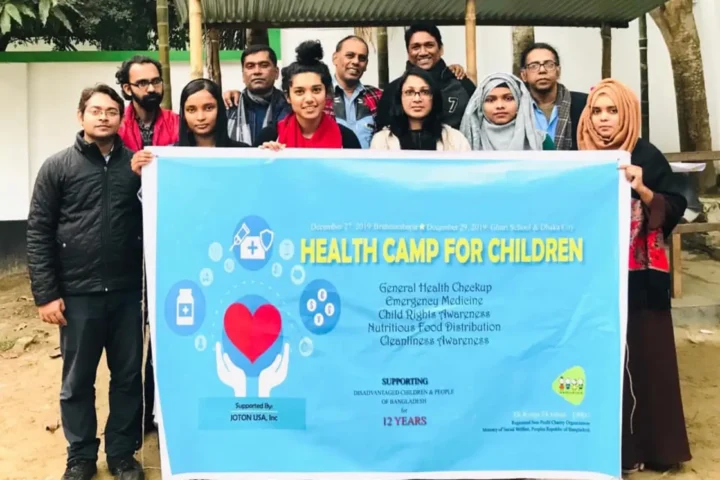
Volunteers hold the Health Camp for Children banner at the start of a camp in 2020

Mobile Health Campaigns

Twice a month we take a clinic to people who cannot reach ours: villages down the river, settlements cut off by flooding, and schools where a camp can see two hundred children in a day.
What it costs to run

The recurring costs of the healthcare program are medicines, dressings and testing strips, the doctors' travel from Dhaka on camp days, and the running of the office at Baishmouja Bazar. There is no rent on a hospital, no permanent salaried medical staff and no vehicle fleet, which is why a modest gift covers a whole clinic morning.

Clinic and campaign reports

Questions about the clinic

Is the clinic really free?

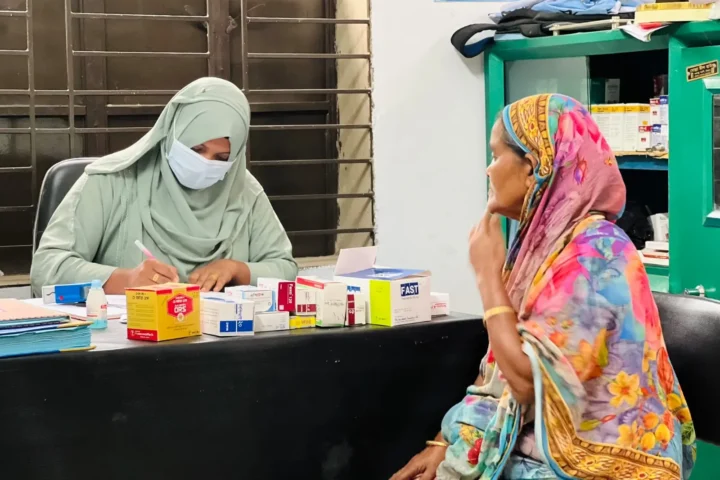
Yes, completely. There is no consultation fee, no registration fee, and no charge for the medicines we hold in stock. Nobody is asked what they earn and nobody is asked to prove anything. The clinic has run on this basis every Friday since July 2019.

Who can attend the clinic?

Anyone who needs to. In practice most of the people who come are women, children and elderly people from Krishnanagar and Birgaon Unions, but we do not restrict the clinic to any village, union, community or group. People travel in from further along the river and are seen in the same order as everybody else.

Do I need an appointment?

No. Come to the office at Baishmouja Bazar between 10:00 and 14:00 on a Friday. Patients are seen in the order they arrive, except that very small children, pregnant women and people who are clearly frail are moved forward in the queue. Arriving early is the surest way to be seen without a long wait.

What conditions does the clinic treat?

Common primary care conditions and chronic disease management: fever, coughs and chest infections, diarrhea, skin complaints, joint and back pain, general weakness and nutritional deficiency, alongside diabetes, high blood pressure and asthma. We also provide wound dressing, infection management, prenatal checks and nutrition advice. Where a case needs a hospital, an operating theater or a specialist we do not have, our doctors say so and refer the patient on.

How can I support a clinic day?

A donation to the healthcare program covers the medicines dispensed and the doctors' travel for a Friday morning at Baishmouja Bazar, where between forty and eighty people are seen. Name the healthcare program when you give and we will send you a report of the clinic day your gift funded, with the patient numbers on the day.

Fund a clinic day

A gift to the healthcare program pays for the consultations and the medicines handed out on a Friday morning at Baishmouja Bazar.

Registered with the Ministry of Social Welfare, Government of Bangladesh · Reg No. Brahman 615/24